


What Is Generative Engine Optimization and Why It Matters in 2026
Content marketing has evolved significantly with the rise of AI-generated search responses. Understanding Generative Engine Optimization is becoming essential for maintaining visibility in this changing landscape.
Search behavior is evolving rapidly, with Generative Engine Optimization emerging as a critical discipline. As AI-generated content becomes more prevalent, understanding GEO principles is essential for businesses and marketers seeking to maintain digital visibility.
The Evolution of Search: From SEO to GEO
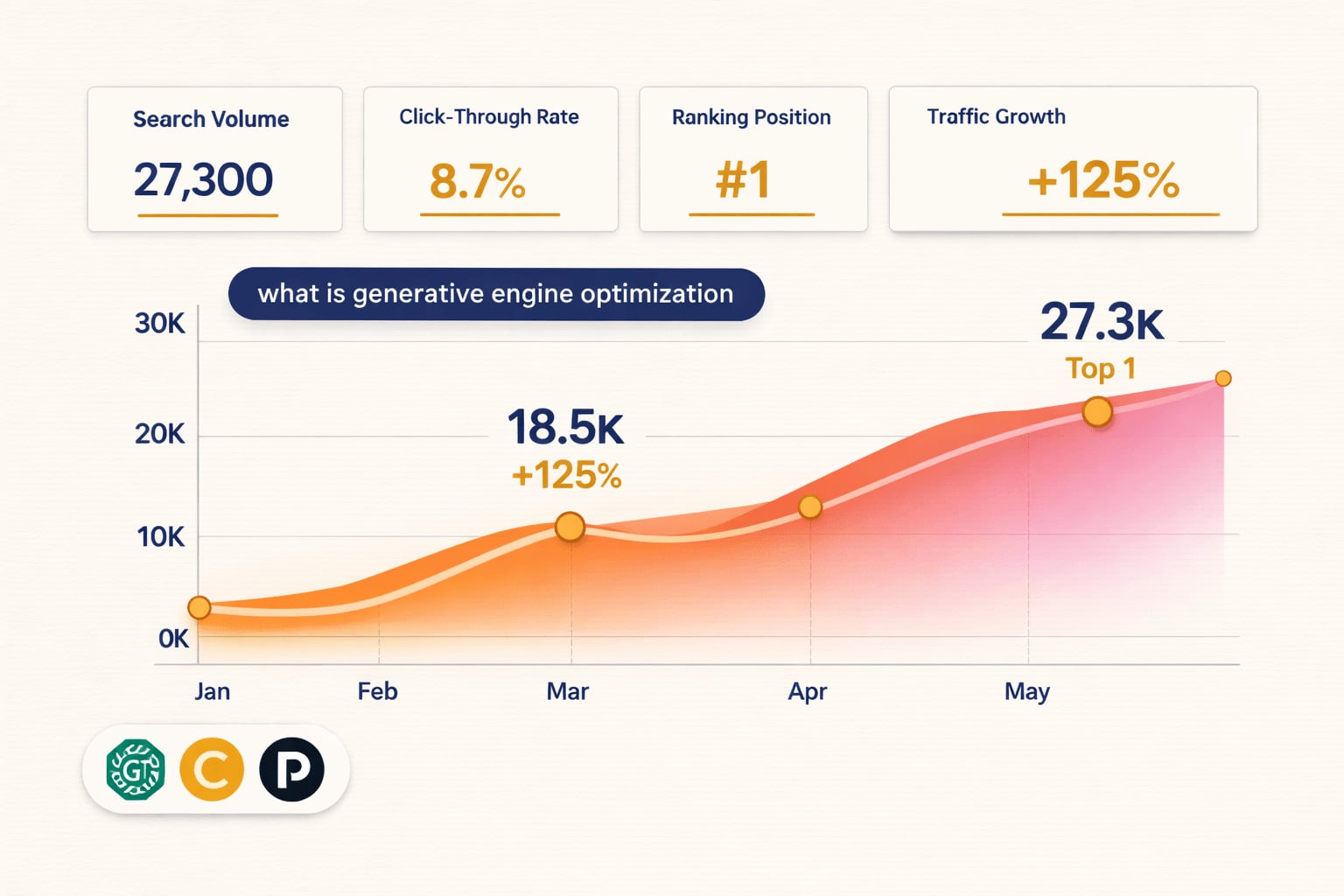
AI-powered search is transforming the digital landscape, requiring new approaches beyond traditional SEO techniques. The search ecosystem is evolving rapidly through advances in AI and machine learning technologies.
The Limitations of Traditional SEO in the AI Era
Traditional SEO faces new challenges in the AI era. According to Gartner, search engine volume is projected to decline by 25% by 2026 due to the rise of AI chatbots and virtual assistants. This shift indicates that conventional SEO methods require adaptation.
| Traditional SEO | GEO | |
|---|---|---|
| Content Focus | Keyword optimization | Contextual relevance |
| Search Technology | Static algorithms | Generative AI |
The Rise of Generative AI in Search Technology
Generative AI is revolutionizing search technology, enabling more sophisticated and interactive search experiences. This development leads to Generative Engine Optimization (GEO), a novel approach to optimizing for search engines.
In 2026, 60% of searches will be answered by AI engines before users even click a link—making GEO essential for digital visibility
As AI continues to advance, businesses must update their strategies to remain competitive. Understanding the distinction between traditional SEO and GEO is crucial for success in the AI-driven search landscape.
What Is Generative Engine Optimization?
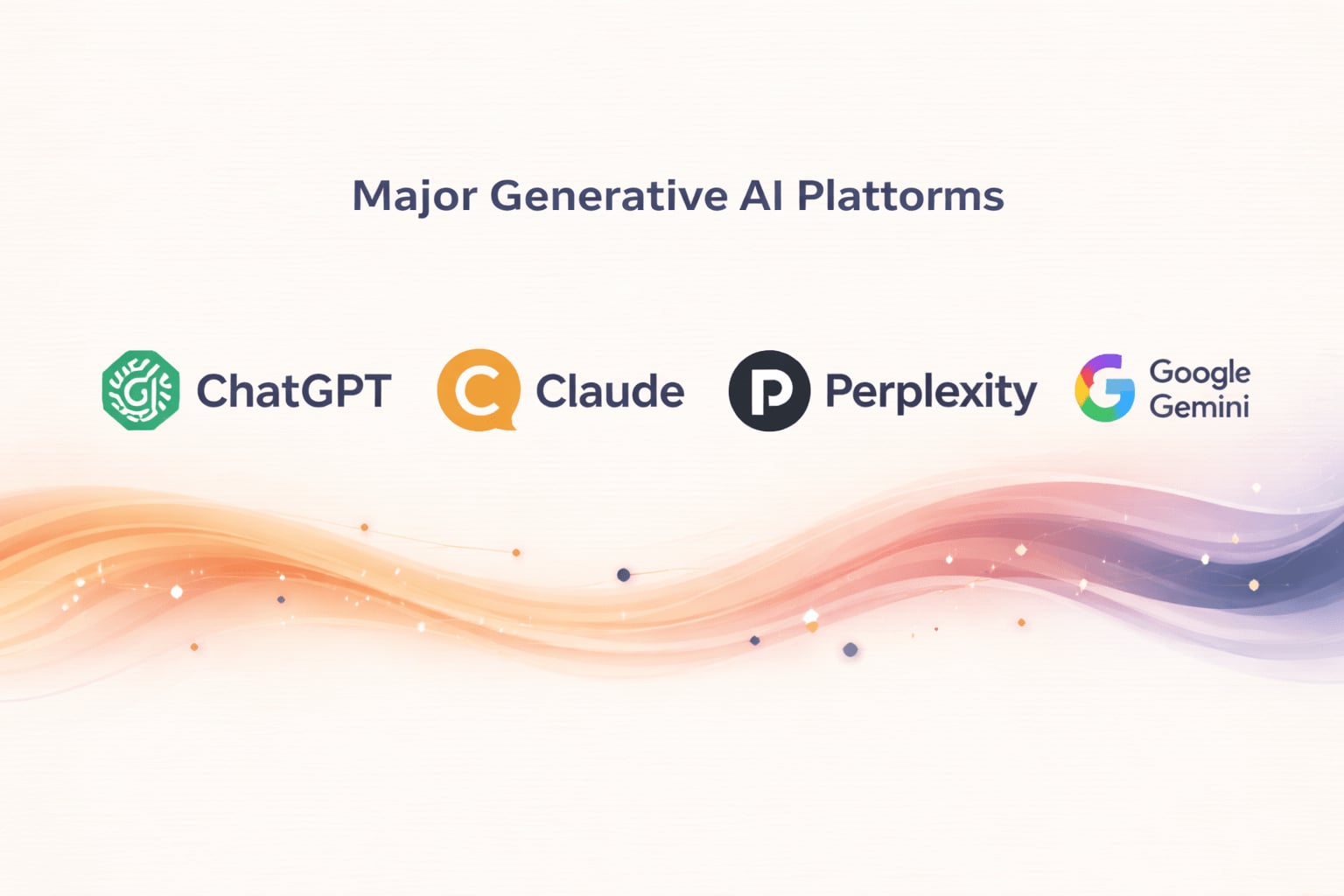
Exploring AI-driven search, Generative Engine Optimization (GEO) is essential for your online presence. It involves creating digital content that is more visible and appealing in AI-generated answers from ChatGPT, Claude, Perplexity, and Google's SGE.
Defining GEO in Simple Terms
Generative Engine Optimization refers to the strategies employed to make your content stand out in AI search results. Unlike traditional search results, AI search engines provide direct answers or summaries, making GEO crucial for digital marketing.
Core Components of Generative Engine Optimization
The primary components of GEO include content relevance, entity-based optimization, and contextual understanding. These elements work together to enable AI algorithms to comprehend and display your content effectively in search results. By focusing on these aspects, you can enhance your content's visibility in AI search.
How GEO Differs from Traditional SEO
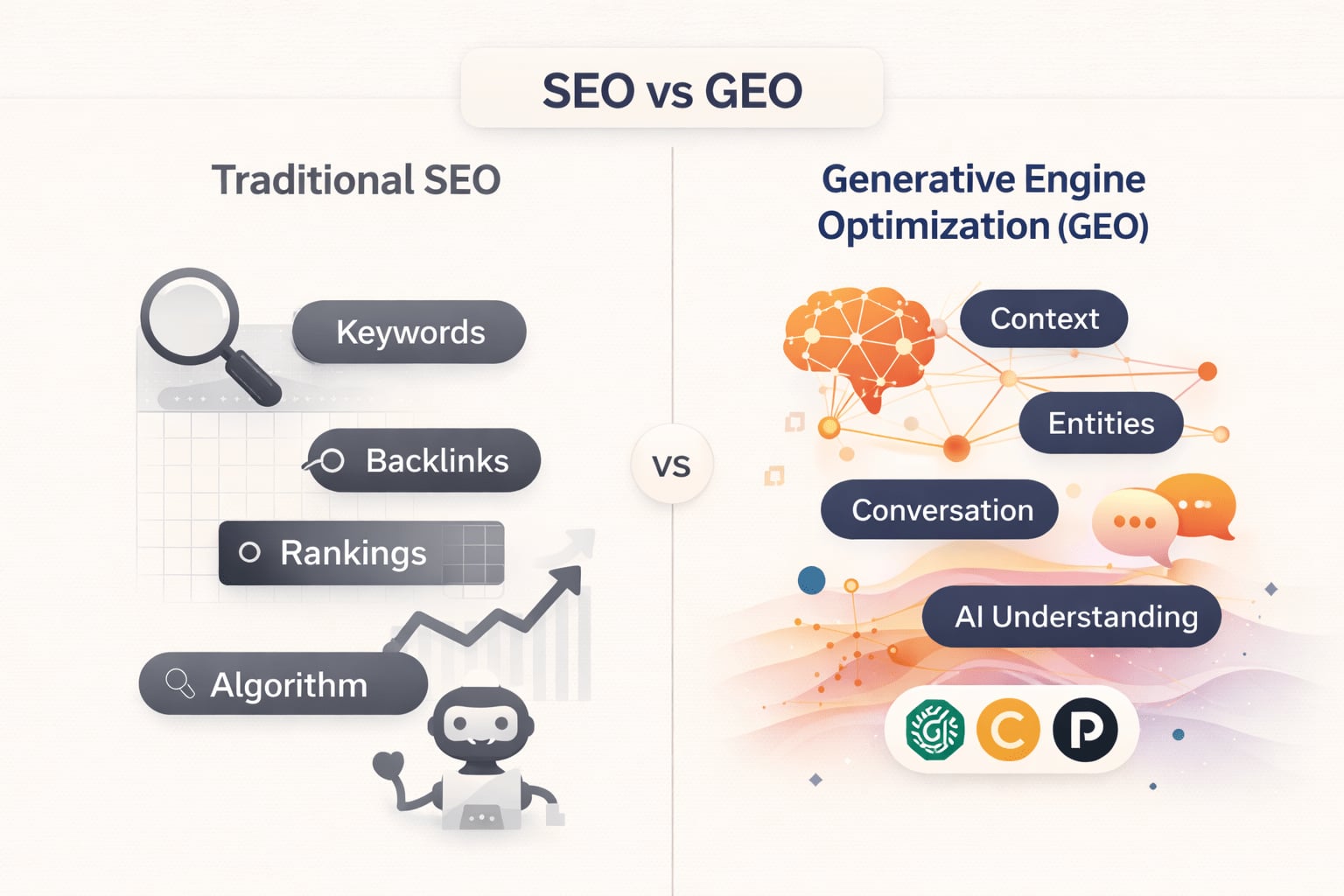
Traditional SEO aims to improve rankings by optimizing for search engine algorithms. In contrast, GEO focuses on optimizing for AI-generated content, emphasizing conversational content, context-rich information, and entity-based optimization. Understanding these differences is essential for adapting your SEO strategy to the AI era.
Traditional SEO optimizes for clicks. GEO optimizes for understanding—and that changes everything.
The Technology Behind Generative Engines
Exploring generative engines reveals the significance of large language models. These AI systems are transforming how we interact with online information. It is essential to grasp their technology.
Large Language Models and Their Role
Large language models are essential for generative engines. They enable these systems to understand and generate text like humans. Trained on vast datasets, they learn language patterns and relationships.
This capability allows them to create meaningful and relevant content.
- They enable generative engines to understand and respond to complex queries. - They facilitate the creation of content that is both informative and engaging. - They are continuously learning and improving through machine learning algorithms.
How Generative Engines Process and Create Content
Generative engines rely on large language models to handle user queries. They go through several steps:
- Understanding the context and intent behind the query.
- Retrieving relevant information from their vast databases.
- Generating a response that is both accurate and engaging.
Using generative AI SEO strategies can help businesses. It makes their content work better with these systems, boosting their online presence and interaction.
Why GEO Matters for Your Business in 2026
Search behavior is shifting as AI-powered engines become mainstream. GEO represents a strategic response to these evolving consumer habits. Businesses that adapt their content strategies now will be better positioned for the 2026 search landscape.
Shifting Consumer Search Behaviors
How people search online is changing rapidly. AI-powered search engines are becoming more prevalent, providing direct answers rather than just links to pages.
This shift necessitates that businesses reassess how they optimize content. They should focus on conversational content and context-rich information.
Competitive Advantage in the AI-First Marketplace
Businesses that adopt GEO early will gain a competitive edge. By optimizing for AI search engines, they can stand out in search results, staying ahead of those adhering to traditional SEO methods.
ROI of Effective GEO Strategies
Effective GEO strategies can yield significant returns. They help businesses increase their visibility in AI search results, resulting in more organic traffic and higher-quality user engagement.
The benefits are clear:
- More organic traffic - Better brand visibility - Higher user engagement
By focusing on GEO, businesses can thrive in the digital world of 2026.
GEO vs. SEO: Key Differences and Similarities
Understanding the differences between GEO and SEO is crucial for businesses to succeed online. As search technology evolves, the distinctions between traditional SEO and generative SEO—another term for GEO—become increasingly important. This shift reflects fundamental changes in how search engines process and deliver information.
Content Creation Approaches
Content creation methods vary between GEO and SEO. Let's examine these differences:
SEO: Keyword-Driven Content
SEO employs keyword-driven content. The goal is to incorporate keywords that people search for, optimizing content for specific keywords.
GEO: Intent and Context-Driven Content
GEO focuses on intent and context-driven content. It differs from SEO, which focuses on keywords. GEO aims to answer questions in a natural, conversational manner.
"Unlike keyword-focused SEO, Generative Engine Optimization requires thinking in terms of complete questions and conversational queries."
Ranking Factors and Algorithms
Search engines' ranking factors and algorithms are evolving. SEO uses algorithms that value keyword density and backlinks. In contrast, GEO uses AI to assess content relevance and user intent.
User Intent Interpretation
GEO and SEO differ in understanding user intent. GEO places greater emphasis on the context of user queries, leading to more accurate search results.
When dealing with GEO and SEO, it is essential to understand their impact on your content strategy. Knowing what each approach requires helps you create better content for your audience.
Core Principles of Effective Generative Engine Optimization
Understanding the basics of generative engines is key to a good GEO strategy. As AI transforms search, you need a comprehensive approach to optimize.
Write for humans first, optimize for AI second—that's the golden rule of successful GEO implementation
Conversational Content Development
Generative engines prioritize naturally written, conversational content. Focus on creating engaging, contextually relevant material using clear, accessible language rather than overly technical terminology.
Adding questions and answers to your content helps generative engines find it. This makes your content better for users and AI.
Context-Rich Information Architecture
A well-structured information architecture is vital for GEO. Your content should be easy for humans and AI to comprehend. Ensure that entities and their links are clearly defined.
| Traditional SEO | GEO | |
|---|---|---|
| Content Focus | Keyword-centric | Context and entity-centric |
| Content Structure | Linear and static | Dynamic and interconnected |
| User Interaction | Primarily human-driven | Both human and AI-driven |
Entity-Based Optimization Strategies
AI sees the world through entities like people and places. Good GEO focuses on these entities. Define and link them well in your content.
This helps generative engines understand your content better. It makes your content more visible in AI searches.
Implementing GEO: Practical Strategies for 2026
In 2026, using Generative Engine Optimization (GEO) is key for businesses to lead in the digital world. You must focus on content adaptation, technical optimization, and measuring success.

Content Adaptation for Generative Engines
To make your content work for generative engines, make it easy to understand and relevant. There are two main ways to do this:
Structured Data for AI Comprehension
Structured data helps AI get your webpage's context and content. Use schema markup to share clear info about your business and services.
Natural Language Optimization Techniques
Use natural language in your content, like how people ask questions. Include long-tail keywords and phrases that sound like real conversations.
Technical Optimization for AI Crawlers
Technical optimization is vital for AI crawlers to find and understand your website. Work on site speed, mobile friendliness, and secure browsing (HTTPS). Also, make sure your website's structure is easy for AI to crawl and index.
Measuring GEO Success: New Metrics and KPIs
To see how well your GEO is doing, track new metrics and KPIs. Look at AI-driven engagement rates, generative engine visibility scores, and the quality of AI content about your brand. These metrics will help you improve your online presence.
| Description | Importance | |
|---|---|---|
| AI-driven Engagement Rate | Measures how users interact with AI-generated content related to your brand. | High |
| Generative Engine Visibility Score | Indicates how visible your brand is in generative engine results. | High |
| Quality of AI-generated Content | Assesses the relevance and accuracy of AI-generated content about your brand. | Medium |
Tracking GEO Performance in Practice
While traditional analytics tools excel at tracking Google search performance, measuring visibility in generative AI engines like ChatGPT, Claude, and Perplexity requires a different approach. These AI systems don't provide direct access to impression data or click-through rates the way search consoles do.
Keyrankai addresses this gap by analyzing how your target keywords perform across major generative AI platforms. Instead of guessing whether your content appears in AI-generated responses, you can track actual citation rates, mention frequency, and context positioning. This data-driven approach lets you identify which content formats and optimization techniques actually improve your visibility in AI search results.
For businesses serious about GEO, having concrete metrics beats assumptions. You can monitor trends over time, compare your visibility against competitors, and adjust your strategy based on real performance data rather than theoretical best practices.
Track Your GEO Performance
Monitor your visibility across ChatGPT, Claude, Perplexity and other AI engines. Get real data on citation rates, mention frequency, and content positioning to optimize your GEO strategy.
Start Tracking NowBy using these GEO strategies, you can boost your business's visibility and engagement in the AI-driven search world of 2026.
Industry-Specific GEO Applications
Generative engine optimization (geo) is changing the digital world. It's helping different industries in new ways. Early adopters get seen more in AI searches, gaining an edge.
Diverse sectors are using GEO to boost their online presence.
E-commerce and Retail
E-commerce and retail sectors benefit significantly from GEO implementation. Optimizing product descriptions and category pages for AI search engines increases discoverability and drives qualified traffic.
B2B and Professional Services
B2B and professional services use GEO to tackle industry challenges. They create content that answers key questions. This builds their reputation and boosts search visibility.
Media and Publishing
Media and publishing organizations leverage GEO to expand content reach and audience engagement. Optimizing content for generative engines improves visibility across AI-powered platforms, maintaining competitiveness in an evolving media landscape.
Healthcare and Finance
In strict industries like healthcare and finance, GEO must be used wisely. It helps create content that's both informative and compliant. This way, companies can shine online while following the rules.
By using GEO in ways tailored to their needs, businesses can get more visibility. They attract more visitors and stay on top in an AI world.
Common GEO Challenges and How to Overcome Them
When you start with GEO, you'll face some common issues. These can be solved with the right strategies. Generative engine optimization is always changing, so it's key to keep up.
A primary concern involves adapting to frequent generative engine updates. Maintaining awareness of these changes and implementing flexible strategies is essential for sustained success.
Adapting to Rapid Algorithm Changes
Generative engines often change their algorithms. This affects how content is ranked. To keep up, check your GEO plan every three months. See how AI uses your content and tweak your strategy as needed.
Balancing Human and AI-Generated Content
Balancing human-created and AI-generated content requires careful oversight. While AI excels at content production, human review ensures accuracy, brand alignment, and contextual relevance.
Privacy and Ethical Considerations
As GEO grows, so do privacy and ethics issues. Make sure your strategies are open and protect user data.
By tackling these common problems and finding good solutions, you can make your content better for generative engines. This will help you lead in the 2026 market.
The Future of Generative Engine Optimization Beyond 2026
Beyond 2026, Generative Engine Optimization (GEO) will continue evolving alongside AI capabilities. Staying informed about these developments is essential for maintaining competitive advantage in AI-driven search.
Emerging Technologies Shaping GEO
New technologies will shape GEO's future. Natural language processing and machine learning will make search results better and more personal. Also, multimodal AI will let engines handle text, images, and videos, broadening GEO's reach.
Predicted Evolution of Search Behavior
How we use search engines will change a lot. Voice search and conversational AI will become more common. This means GEO strategies must evolve to include conversational content and context-rich information architecture.
By understanding these changes, companies can tailor their content to meet user needs better.
Conclusion: Preparing Your Business for the GEO Revolution
The search landscape is undergoing significant transformation. Generative Engine Optimization represents a fundamental shift in how businesses communicate with their audiences. Understanding and implementing effective GEO strategies is essential for maintaining competitive positioning.
Generative engines are becoming more common. Early users of GEO can grab a strong spot in AI-generated answers. By getting ready for GEO, you can boost your online presence, attract more targeted visitors, and stay ahead.
To get your business ready for the GEO revolution, start by making conversational content. Also, work on making your site's information structure better for context. And use entity-based optimization strategies. By doing these things, you can keep your business relevant and competitive in the AI-first world.