

AI Search Optimization in 2026: What 63% of Marketers Are Missing
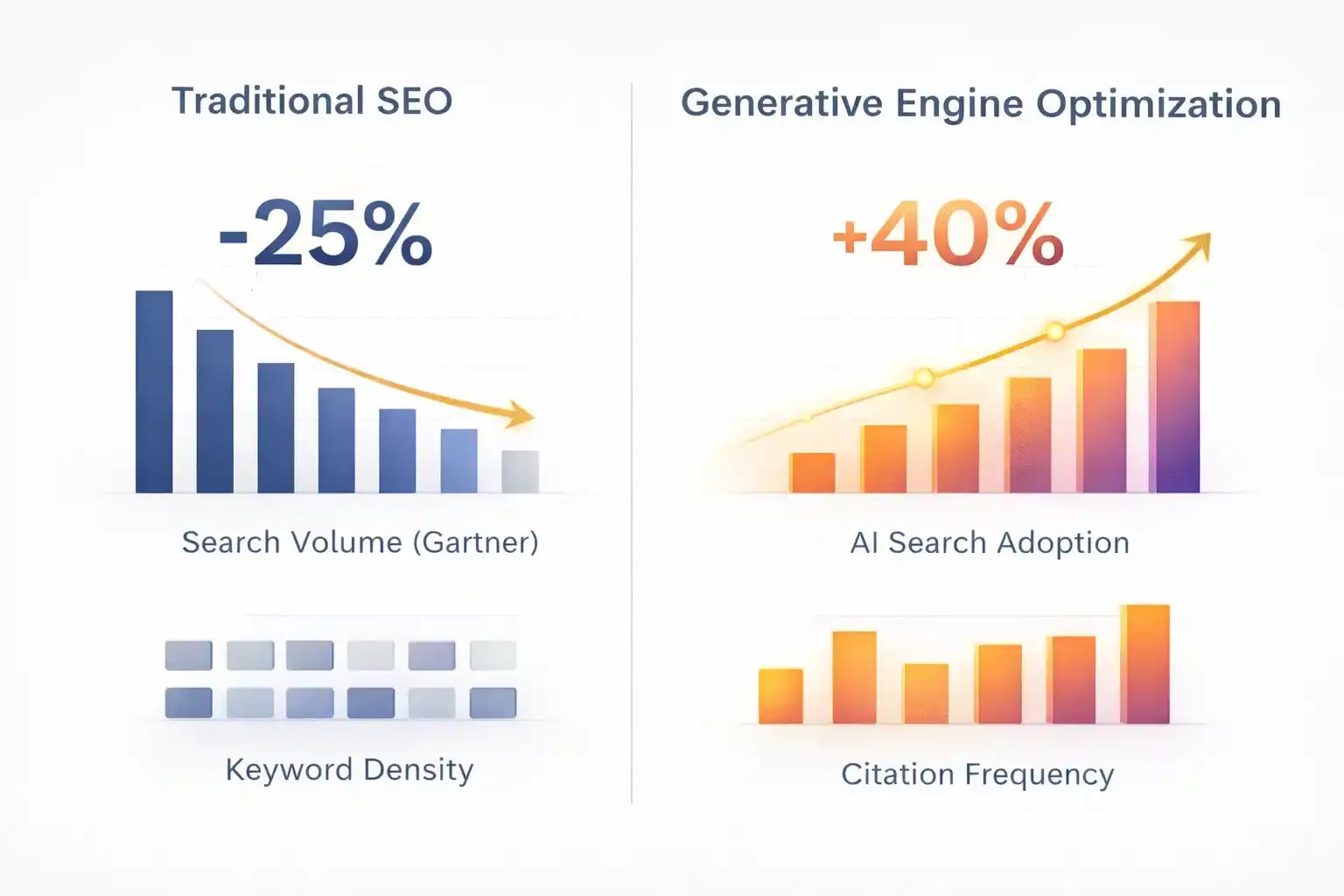
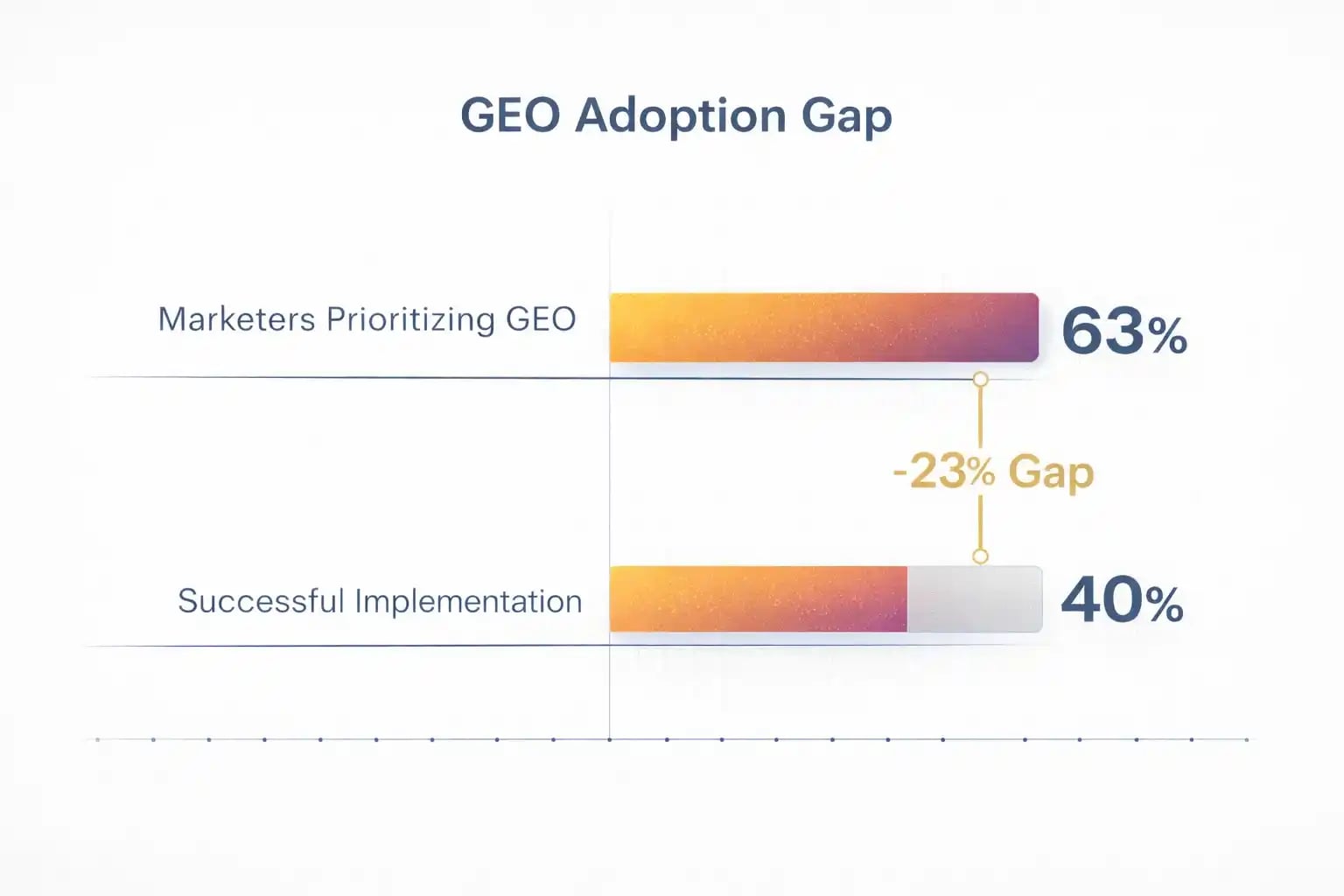
In early 2026, digital marketing continues undergoing fundamental transformation. Generative Engine Optimization (GEO) has emerged as a critical discipline, yet adoption remains fragmented. According to recent industry research, while 63% of B2B marketers prioritized GEO initiatives in 2024–25, implementation rates remain below 40%.
This shift toward GEO reflects the growing influence of AI-driven search engines on content discovery and visibility. Marketers must adapt their strategies beyond traditional rankings to capture citations and mentions in AI-generated responses.

The Evolution of AI Search: From Keywords to Intent
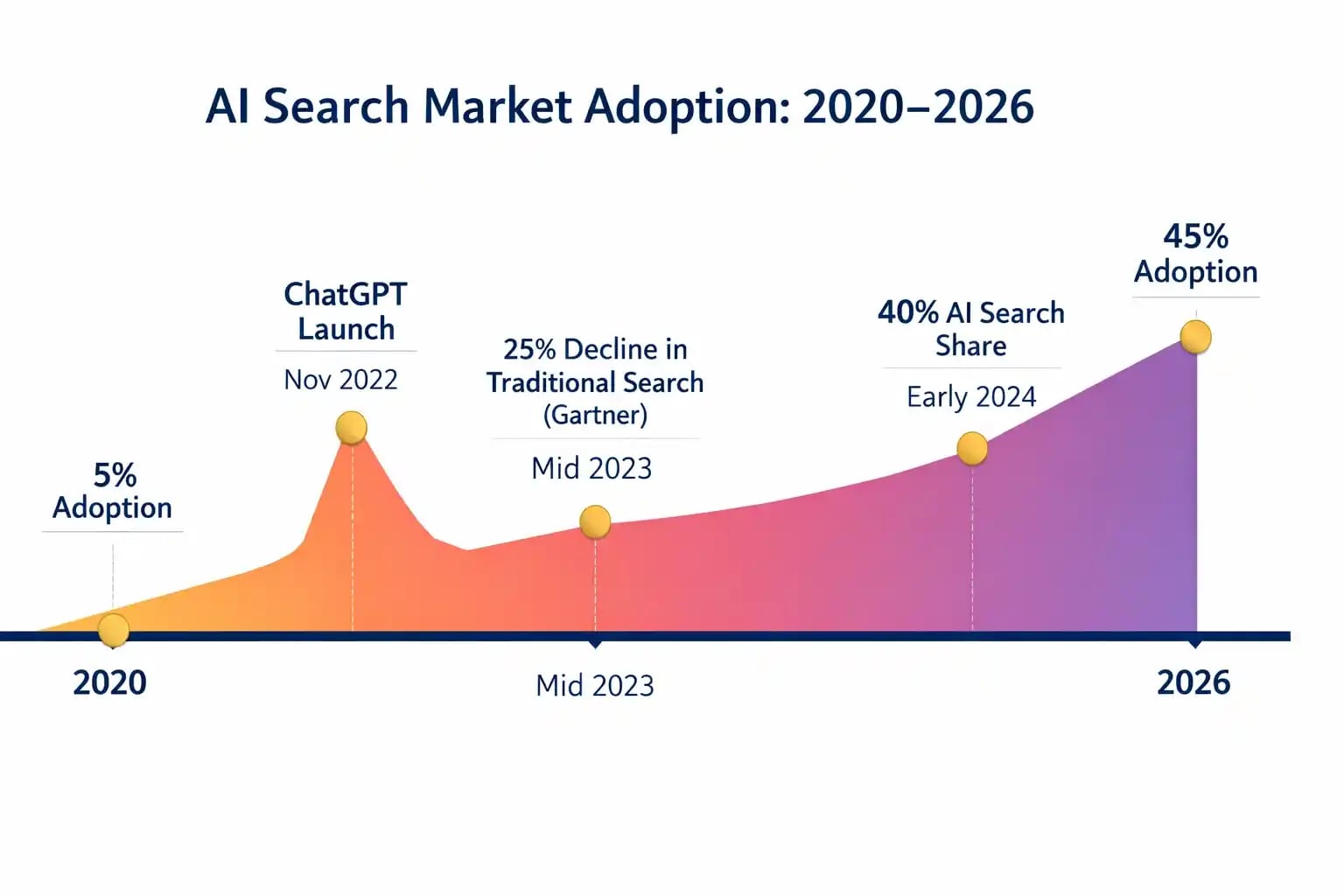
AI-generated content has reached mainstream adoption, with the global LLM market projected to reach $82.1 billion by 2033 (Market Research Future, 2024). This growth underscores the critical importance of optimizing for generative AI systems. As AI technology advances, search optimization methodologies continue to evolve at an accelerating pace.
How Search Algorithms Have Transformed Since 2020
Since 2020, search algorithms have changed a lot. They now use neural networks more than traditional ranking factors. This shows how important it is to understand what users want, not just match keywords.
The Decline of Traditional Ranking Factors
Traditional ranking signals—including keyword density and backlink quantity—have diminished in relative importance as AI algorithms prioritize semantic relevance and contextual accuracy. Modern AI systems evaluate content based on its ability to provide direct, accurate answers to user queries rather than indirect signals of authority.
The Emergence of Neural Networks in Search
Neural networks are key in today's search algorithms. They help search engines understand complex queries and give better results.
The Rise of Generative AI in Search Engines
Generative AI is changing search engines. It's how they now create and show results. This change is seen in the development of detailed AI responses.
From Google SGE to Comprehensive AI Responses
Google's move from traditional search to AI responses is a big step. It aims to give users more direct and relevant answers.
The Impact on Traditional SERP Features
The growth of generative AI is also changing SERP features. As AI content grows, our approach to optimizing for SERPs is evolving.
| Pre-2020 | Post-2020 | |
|---|---|---|
| Ranking Factors | Keyword density, backlinks | Neural networks, user intent |
| SERP Features | Traditional listings | AI-generated responses |
| Content Optimization | Keyword-focused | Intent-based |
Understanding the 2026 AI Search Landscape
The AI search landscape in 2026 is characterized by significant technological advances. New tech is changing how we use search engines. With AI becoming key in marketing, it's vital to keep up.
Key AI Search Technologies Dominating the Market
Today's AI search scene has a few top players. Multimodal search capabilities are a big deal. They let us search with text, images, and voice.
Conversational Search Interfaces
Conversational AI is making search easier. It lets us talk to search engines like we talk to friends. This change is transforming user behavior and what they expect.
The Shift from Traditional SEO to AI-First Optimization
AI search tech is moving us away from old SEO ways. Now, we focus on AI-first optimization strategies. This means understanding new user habits and how to find content.
Changing User Behavior Patterns
People are turning to AI for their searches more and more. This is changing how they ask questions and use search results.
New Content Discovery Mechanisms
AI is opening up new ways to find content. This includes talking to AI and getting personalized tips.
The Critical Data: Why 63% of Marketers Are Falling Behind
Recent data reveals a significant capability gap: 63% of marketers have not yet adapted their strategies for AI search engines. This gap translates to measurable visibility loss in AI-generated responses, where early adopters capture 3-5x more citations than competitors relying solely on traditional SEO.
Survey Results and Industry Benchmarks
Surveys and benchmarks give us a clear picture of AI adoption among marketers. Despite 63% of marketers focusing on Generative Engine Optimization (GEO), many stick to old methods.
Key Performance Gaps in AI Adoption
Marketers who don't get AI search algorithms are losing visibility. This is a big problem.
Success Rates of Early AI Optimizers
On the other hand, those who quickly adopted AI are seeing better results. They get more visibility and engagement in AI searches.
Common Misconceptions About AI Search Optimization
Many marketers think AI search optimization is too hard or not much different from old SEO.
Common Misconceptions
Many marketers believe AI search optimization is either too complex or not significantly different from traditional SEO. This misunderstanding creates a dangerous capability gap.
Outdated Strategies Still in Use
Some marketers keep using old strategies, not knowing they're not working anymore.
Dangerous Assumptions About AI Capabilities
Others make wrong guesses about AI's abilities. This leads to poor optimization efforts.
AI Search Optimization Fundamentals for 2026
In 2026, search optimization continues evolving rapidly through AI integration. With 88–90% of marketers using AI daily, it's clear AI is changing marketing. Businesses need to learn about AI-first content and how to make it visible to AI.
Core Principles of AI-First Content Creation
Creating content that works for both AI and humans is key. It involves Structured Data Implementation and Entity Relationship Mapping.
Structured Data Implementation
Structured data helps AI get your content's context and relevance. By using schema markup and other formats, your content can show up better in AI searches.
Entity Relationship Mapping
Entity relationship mapping makes a network of entities and their connections in your content. This helps AI see your content's depth and breadth, making it more likely to appear in searches.
Technical Requirements for AI Visibility
To make your content visible to AI search engines, focus on technical optimization. This includes Schema Markup Evolution and API Integration for Real-Time AI Indexing.
Schema Markup Evolution
Schema markup is getting more complex as AI tech improves. Keeping up with the latest schema markup is key for AI visibility.
API Integration for Real-Time AI Indexing
API integration lets your content be indexed in real-time. This is vital for businesses with often-changing content, ensuring AI search engines have the latest info.
Generative Engine Optimization Techniques That Drive Results
AI-generated content is becoming more common. It's now essential to know how to optimize for generative engines. Marketers using AI tools for blogs see up to 120% more organic traffic in six months. This shows the power of generative engine optimization (GEO).
Prompt Engineering for Better AI Visibility
Good prompt engineering is key for better AI visibility. It means turning keywords into prompts that AI can get.
Keyword-to-Prompt Translation Strategies
To make keywords work for AI prompts, use contextual keywords. These give more info about the topic.
Context Enhancement Methods
Adding relevant details to your content helps AI engines. It makes your content easier to understand and extract info from.
Content Formatting for Generative AI Consumption
Right content formatting is vital for AI. It includes structured content and optimizing info density.
Structured Content Hierarchies
Use clear headings and subheadings. This helps AI engines navigate and get your content.
Information Density Optimization
Make sure your content is insightful but not too long. Aim for a balance between being detailed and concise.
Data Structuring for Maximum AI Extraction
Data Structuring Techniques
| Description | Benefits | |
|---|---|---|
| Table Formatting | Using tables to present data | Enhances readability for AI engines |
| Semantic HTML | Implementing semantic HTML tags | Improves AI understanding of content structure |

Table and List Formatting Best Practices
Use clear and simple tables and lists. This makes it easier for AI engines to get the info they need.
Semantic HTML Implementation
Use semantic HTML tags. They help give a clear structure to your content. This boosts AI's ability to understand and extract info.
Content Distribution Strategies for AI Engines
With AI systems now processing 12.8% of Google searches, content distribution strategies must evolve beyond traditional channels. Successfully implementing geo optimization strategies requires understanding how AI engines prioritize content that demonstrates clear expertise, proper structure, and authoritative sourcing across different platforms and contexts.
Multi-Platform Content Syndication
Effective AI visibility requires strategic content distribution across platforms where AI engines actively index information. This includes:
Authoritative Source Signals
AI engines evaluate content credibility through multiple signals, including author credentials, publication history, and citation patterns from other authoritative sources.
Structured Content Formats
Implementing consistent formatting across platforms—including schema markup, semantic HTML, and clear hierarchical structures—enhances AI comprehension and increases citation probability.
How to Optimize for Generative AI Without Sacrificing Human Appeal
Optimizing for generative AI while keeping content appealing to humans is a challenge. It needs a mix of technical know-how and understanding what users want. As generative AI continues reshaping search behavior, creators must adjust their methods to please both AI and readers.
Balancing Technical Optimization with User Experience
To find this balance, focus on readability metrics that work for both AI and humans. This means:
Readability Metrics for Dual Audiences
When optimizing for generative AI, keep your readability score appealing to humans. Aim for an 8th to 9th grade level. This makes your content easy to read without being too basic.
Engagement Signals That Matter to Both
Metrics like time on page, bounce rate, and content interaction are key for both AI and humans. Creating engaging content that keeps users on your page can boost your AI search results.
Creating Content That Satisfies Both AI and Human Readers
To please both AI and humans, focus on narrative structures that AI can understand while still touching human emotions.
Narrative Structures That AI Can Parse
Use clear headings, short paragraphs, and structured data. This helps AI algorithms grasp and extract important info from your content.
Emotional Intelligence in AI-Optimized Content
Adding emotional intelligence to your content can make it more appealing to humans. Storytelling techniques and empathetic language help connect with your audience. This makes your content more relatable and engaging.
Industry Insight
Studies show 97% of companies editing or reviewing AI-generated content before publishing. This shows the need to balance AI optimization with human touch.
By following these tips, you can make content that works for both generative AI and human readers. This will improve your visibility and engagement.
Generative Engine Optimization Best Practices for Different Industries
AI is changing how we search online. Businesses in many fields must update their strategies to stay seen. Understanding the special needs and chances of generative engine optimization (GEO) in each area is key.
E-commerce and Retail Sector Strategies
E-commerce sites should work on making product descriptions and catalog setups better for AI searches. Product Description Optimization for AI means using formats that AI can read well. It also means adding keywords that AI can spot.
Product Description Optimization for AI
E-commerce sites should write detailed, keyword-rich product descriptions. They should also use schema markup to help AI understand the content better.
Catalog Structure for Maximum Visibility
A good catalog structure is vital for AI to find your products. Organize your products in a clear, consistent way. This makes it easier for AI to index your content.
B2B Service Optimization Approaches
B2B services need a special strategy. They focus on explaining complex solutions and optimizing technical documents.
Complex Solution Explanation Frameworks
B2B companies should create clear, simple ways to explain their complex solutions. Use formats that AI can read well to boost visibility.
Technical Documentation Optimization
Optimizing technical documents for AI means using structured data. Make sure the content is easy for AI to crawl.
Content and Media Publication Techniques
For content and media, using multimedia tagging systems and syncing content across platforms is key.
By using these specific strategies, businesses can get more visibility in AI-driven search results.
Advanced AI Content Optimization Tools and Technologies
In 2026, AI search optimization is changing fast with new tools and tech. The global market for AI technologies is growing fast. This will greatly affect how we optimize content.
AI-Powered Content Analysis Platforms
These platforms are key for understanding how content performs in AI searches. They have important features like:
Predictive Optimization Software
Predictive tools forecast how content will do and adjust strategies. They have cool features like:
Automated AI Testing Environments
Automated testing lets businesses improve their content strategies. Key parts include:
Using these advanced AI tools, businesses can boost their AI search visibility. They can also stay ahead of the competition.
Measuring Success: KPIs for AI Search Optimization in 2026
AI-driven searches have reached mainstream adoption, requiring new measurement frameworks. Understanding which metrics accurately reflect AI search performance is essential for optimization efforts.
Tracking AI Search Visibility
While traditional analytics track Google rankings, platforms like Keyrankai enable monitoring visibility across ChatGPT, Claude, Perplexity, and Gemini—providing the AI citation frequency and knowledge panel metrics outlined below.
Beyond Traditional Metrics: New Success Indicators
Old SEO metrics are being replaced by more advanced ones. These new indicators better capture AI search dynamics. Two key new indicators are:
AI Citation Frequency
This measures how often your content is cited by AI systems. It's across various platforms.
Knowledge Panel Inclusion Rates
Being in knowledge panels shows your content's authority and relevance. It's a strong indicator in AI search results.
AI Engagement Scoring Systems
Engagement metrics are now key to evaluating AI search optimization success.
Interaction Depth Measurement
This assesses how deeply users interact with your content. It's through AI interfaces.
Follow-up Query Generation
Your content's ability to prompt follow-up questions shows its relevance. It's a sign of usefulness.
Conversion Attribution in AI-Driven Searches
Attributing conversions to AI-driven searches is complex. Advanced attribution models are needed.
Multi-Touch Attribution Models
These models track the customer journey. It's across multiple AI-driven touchpoints.
Voice and Visual Search Conversion Tracking
As voice and visual searches grow, tracking conversions is essential. It's for these channels.
Key Performance Indicators for AI Search
| Description | Importance Level | |
|---|---|---|
| AI Citation Frequency | Measures how often content is cited by AI systems | High |
| Knowledge Panel Inclusion | Indicates authority and relevance in AI search results | High |
| Interaction Depth | Assesses user interaction with content via AI interfaces | Medium |
| Follow-up Query Generation | Signifies content relevance and usefulness | Medium |
| Multi-Touch Attribution | Tracks customer journey across AI-driven touchpoints | High |
| Voice/Visual Tracking | Essential for tracking conversions from voice and visual searches | High |
Conclusion: Preparing Your Organization for the AI Search Revolution
The AI search landscape continues evolving rapidly. With implementation gaps affecting 63% of marketers, organizations that adapt their strategies now gain measurable competitive advantages in AI-generated responses.
By implementing AI search optimization and generative engine optimization best practices, businesses can significantly improve visibility across AI platforms. Organizations that position AI engines as primary discovery channels will outperform competitors focused exclusively on traditional SEO.
Success requires integrated focus on AI-first content creation, technical optimization, and structured data implementation. This comprehensive approach maximizes visibility in AI search results and drives measurable business outcomes.
Maintaining competitive positioning requires ongoing adaptation to AI search developments and continuous strategy refinement. Organizations that establish robust AI search optimization frameworks now will be better positioned for sustained success as AI-driven search becomes the dominant discovery mechanism.
Track Your AI Search Performance
Monitor your visibility across ChatGPT, Claude, Perplexity, and Gemini with real-time AI citation tracking and keyword opportunities.
Start Optimizing for AI